🦈As Seen on Shark Tank 🦈 Book the Boys everyone is talking about • 🦈As Seen on Shark Tank 🦈 Book the Boys everyone is talking about • 🦈As Seen on Shark Tank 🦈 Book the Boys everyone is talking about • 🦈As Seen on Shark Tank 🦈 Book the Boys everyone is talking about • 🦈As Seen on Shark Tank 🦈 Book the Boys everyone is talking about • 🦈As Seen on Shark Tank 🦈 Book the Boys everyone is talking about • 🦈As Seen on Shark Tank 🦈 Book the Boys everyone is talking about • 🦈As Seen on Shark Tank 🦈 Book the Boys everyone is talking about • 🦈As Seen on Shark Tank 🦈 Book the Boys everyone is talking about • 🦈As Seen on Shark Tank 🦈 Book the Boys everyone is talking about • 🦈As Seen on Shark Tank 🦈 Book the Boys everyone is talking about • 🦈As Seen on Shark Tank 🦈 Book the Boys everyone is talking about • 🦈As Seen on Shark Tank 🦈 Book the Boys everyone is talking about • 🦈As Seen on Shark Tank 🦈 Book the Boys everyone is talking about • 🦈As Seen on Shark Tank 🦈 Book the Boys everyone is talking about • 🦈As Seen on Shark Tank 🦈 Book the Boys everyone is talking about •
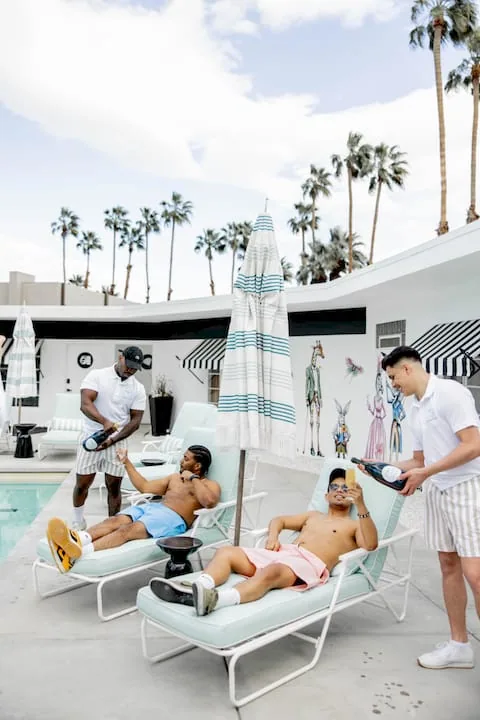
Hire the Cabana Boys to elevate your event with personalized party hosting and bartending services for 2-4 hours. These charming, vetted gentlemen will serve drinks, entertain, keep the area tidy, and make your event unforgettable, whether it’s a pool party, bachelorette, or themed event.
Gourmet brunch from local favorites, bottomless mimosas, music, and party games — hosted poolside by the Cabana Boys. The easiest, most-talked-about morning of the weekend.
We bring tons of game ideas and supplies – bachelorette games, drinking games, signature games, fun icebreakers, music games, and more – that we will host at your Airbnb. We can also help facilitate any games that you have in mind. Think of us as game show hosts, but in a sexy pool boy kind of way.
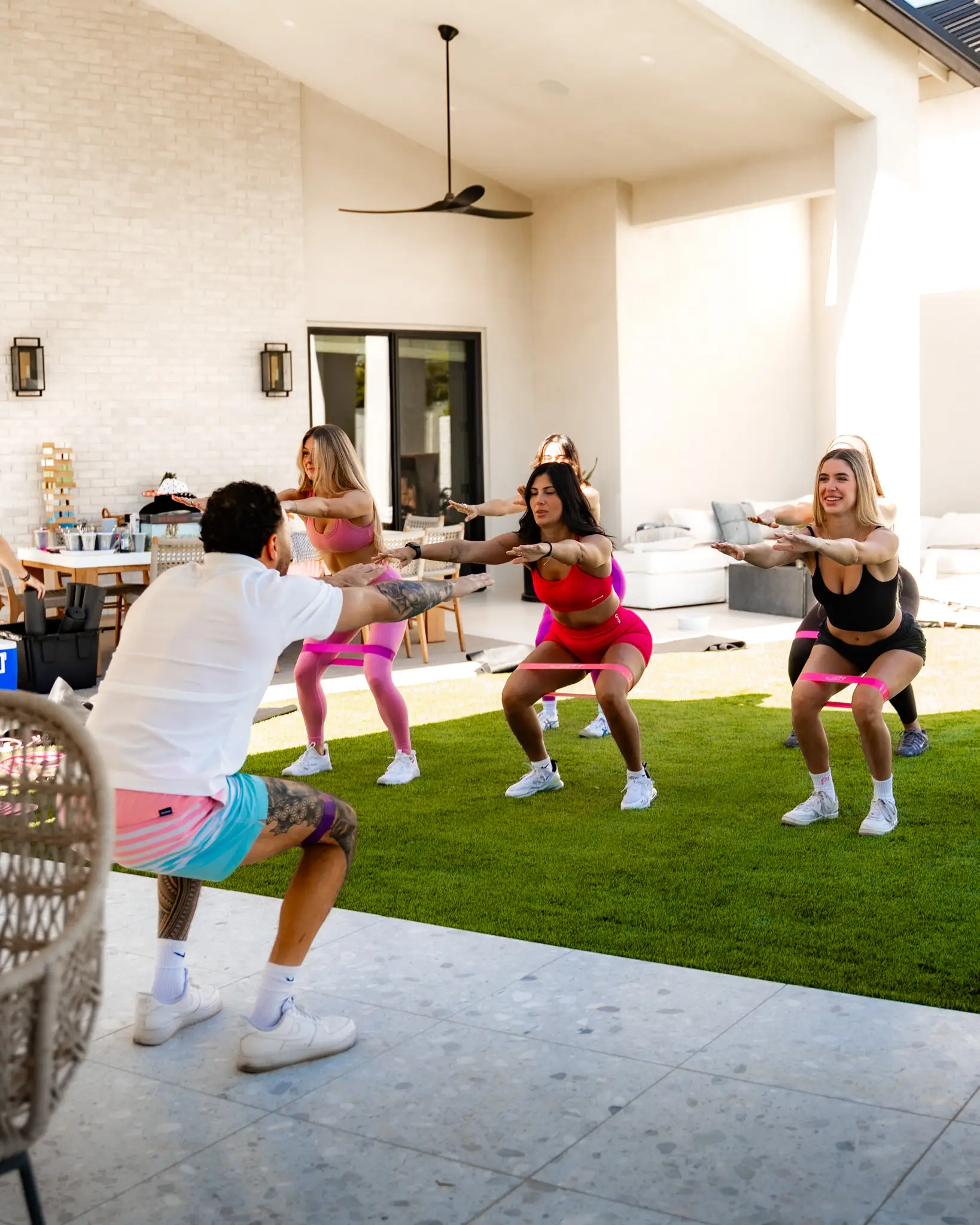
We’ll lead you through a fun, high-energy 45-minute workout with mats, bands, and sliders – then flip straight into party mode. Think of it as a fitness class that ends with your own private pool boy hosts keeping the vibe alive.
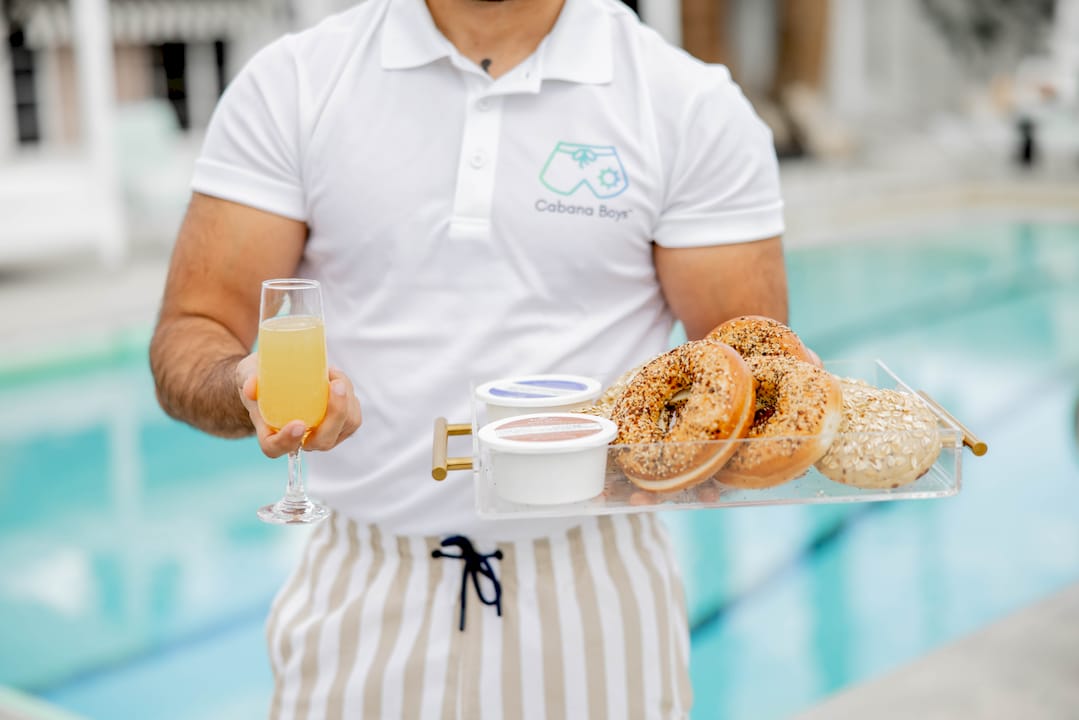
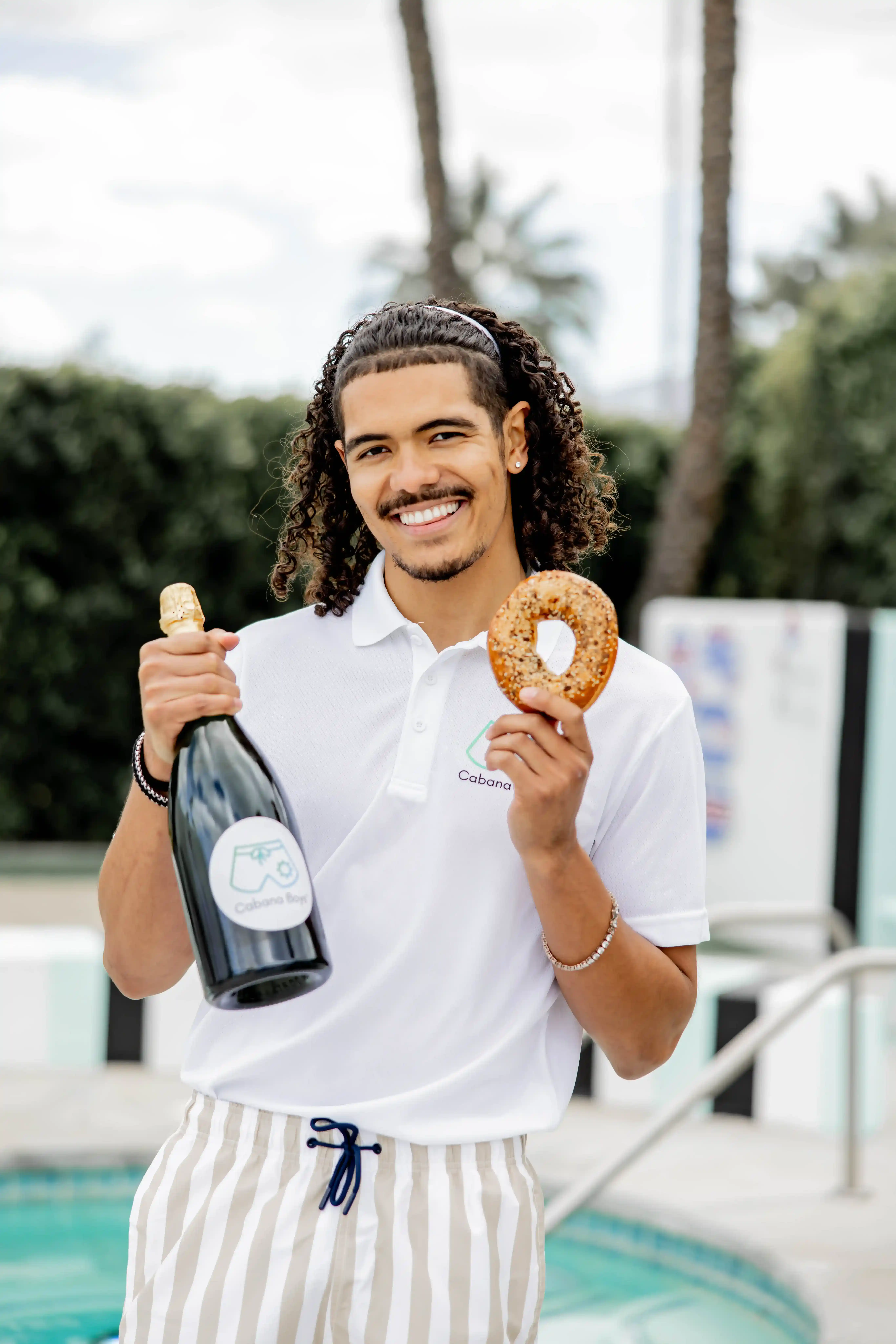
Kick off your morning with a visit from one of our hand-picked gentlemen who will set up a delicious spread with a dozen of gourmet assorted bagels, two tubs of delicious cream cheese, a large container of hot coffee, and a carafe of fresh orange juice.
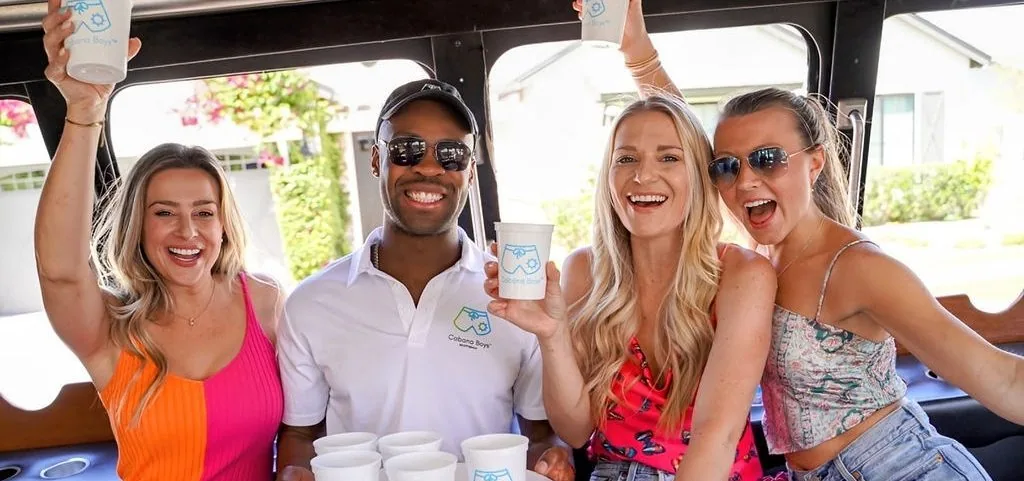
Hop on the luxurious, air conditioned party bus and we’ll cruise around Old Town, bumping music, dancing, drinking, and playing some signature games. We’ll make stops at our partner bars, where you’ll access some exclusive drink specials.
Our Cocktail CowBoys are at your service — we’ll serve you drinks and refreshments, take pictures (or pose with you), be Spotify DJs, help with party/drinking games, keep the party area tidy, keep you company and take out the trash when we leave.
Two Cocktail CowBoys will deliver brunch for you and your crew and get you back into celebration mode. They’ll set up breakfast for you, pour mimosas, turn on some tunes, host some party games, help you nurse your hangover, and keep the party area clean.
Take a break from the bars and get ready for the perfect night in with your gals… a Cocktail CowBoys game night! We bring tons of game ideas and supplies – bachelorette games, drinking games, signature games, fun icebreakers, music games, and more!
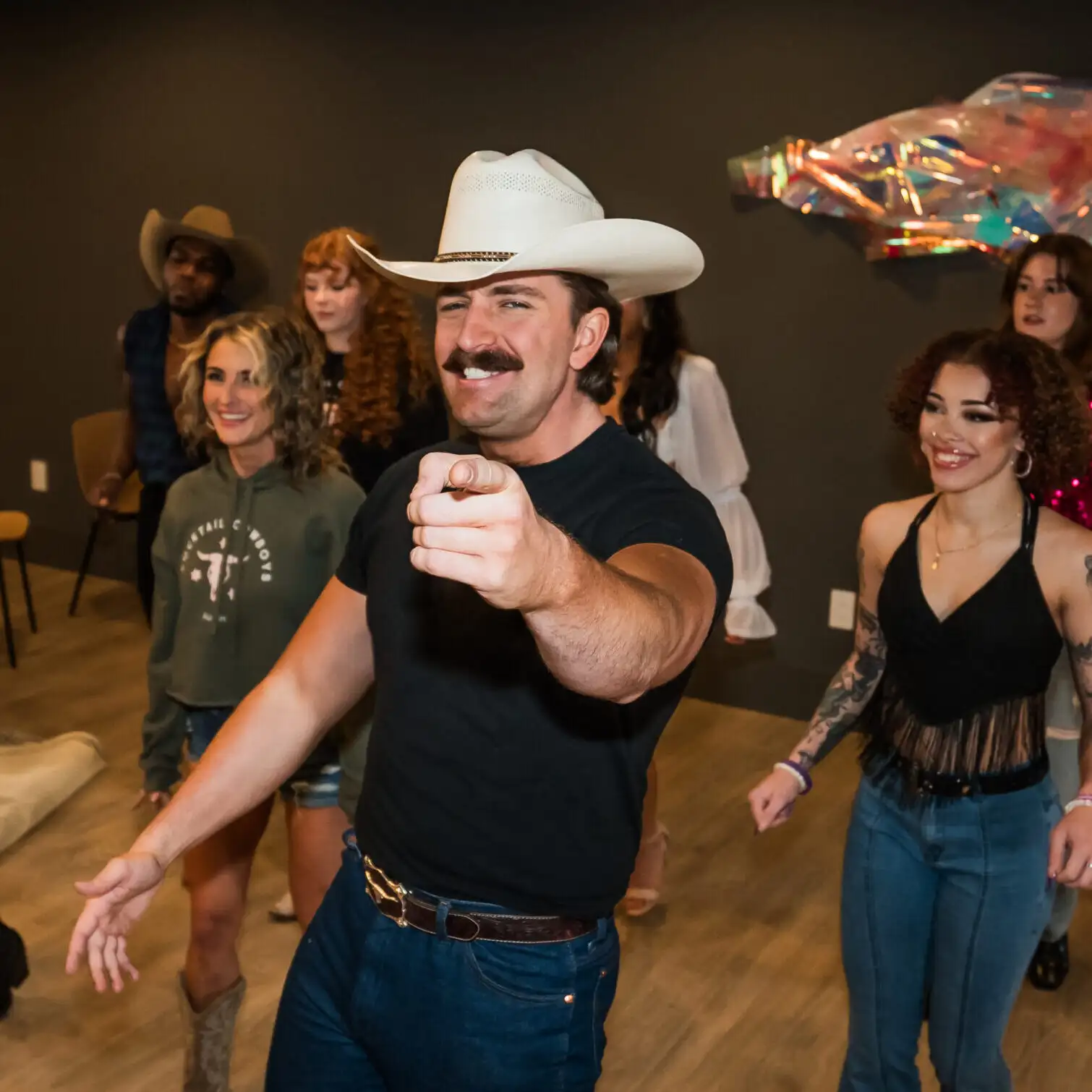
A honky-tonk adventure with cowboy charm, dancing, and unforgettable memories. Your personal party crew for a wild night of bars, boots, and Broadway debauchery.
Kick off your day with a 45-minute cowboy-led workout, then roll right into an hour of games, drinks, and hosting. Think of it as fitness meets Western hospitality — charming, playful, and unforgettable.
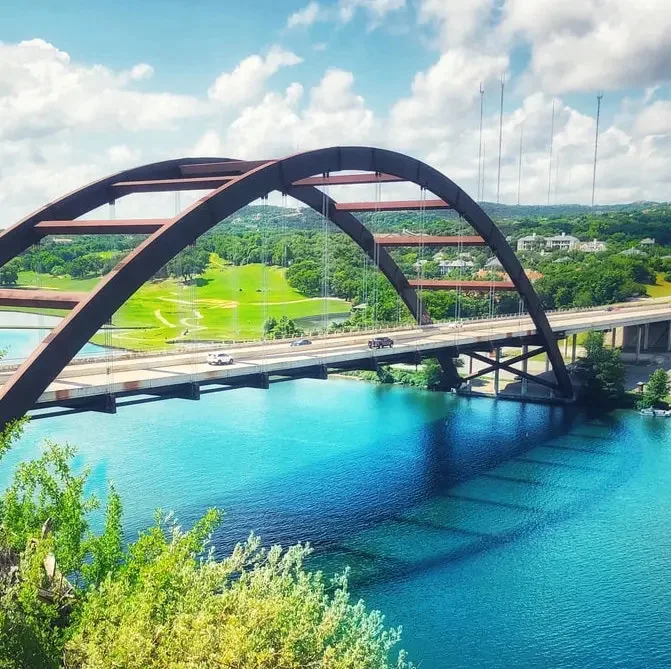
Grab your boots and head to the ultimate spot for unforgettable parties, legendary food, and live music that never stops. Saddle up for an epic Austin weekend!
With cobblestone streets, pastel sunsets, and rooftop bars, Charleston has hospitality around every corner. Charm, style, and just the right amount of mischief.
Sun, skin, and serious vibes—Miami and Fort Lauderdale are built for bold, unforgettable weekends. From pool parties to rooftop hangs, South Florida brings the heat.
With mid-century charm, desert sun, and iconic poolside vibes, Palm Springs is the ultimate escape for unforgettable weekends and inclusive celebrations.
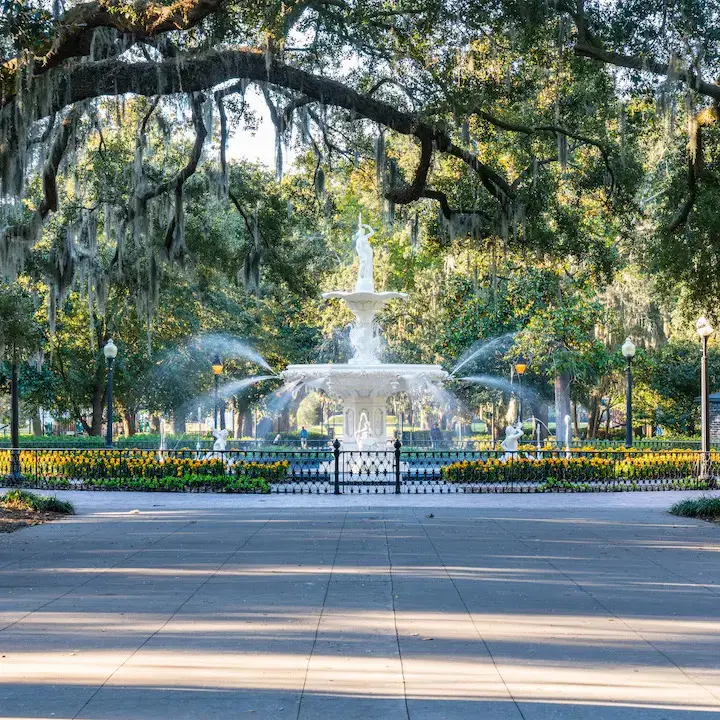
From cobblestone streets to coastal retreats, Savannah is the perfect place to sip, celebrate, and let loose. Open container laws make this one true party town.
Planning a bachelorette party in Scottsdale? Cabana Boys is the #1 rated activity in town – charismatic hosts, poolside vibes, and memories the bride won’t stop talking about.
With mid-century charm, desert sun, and iconic poolside vibes, Palm Springs is the ultimate escape for unforgettable weekends and inclusive celebrations.
Special Requests Party Service: Your 2026 Planning Guide
Special requests party service is defined as the professional practice of identifying, coordinating, and fulfilling individualized guest needs before and during a celebration. These needs range from dietary restrictions and accessibility accommodations to themed decor and personalized timing. The role of special requests party service goes far beyond simple logistics. It determines whether guests feel seen, comfortable, and genuinely celebrated. Cabana Boys and Cocktail CowBoys recognized as the #1 bachelorette experience in top US party destinations and featured on Shark Tank and the New York Times, have built their reputation on exactly this kind of personalized hospitality.
What is the role of special requests party service in event planning?
Special requests party service functions as the backbone of guest experience in event planning. Without it, even the most beautifully decorated venue can leave guests feeling overlooked. The industry term for this practice is “bespoke event services,” which covers every accommodation made outside the standard service offering.
Special requests are core hospitality components, not interruptions to the event flow. That distinction matters because it changes how hosts and planners prioritize them. When a team treats a dietary need or a mobility request as an afterthought, the guest notices. When they treat it as a built-in part of the plan, the event feels effortless.
Cabana Boys and Cocktail CowBoys demonstrate this principle in practice. Their Cabana Boys and Cocktail CowBoys engage guests, serve refreshments, and facilitate games while keeping the environment fun and tidy. That level of attentiveness requires knowing what guests need before they have to ask.
What types of special requests are most common and impactful?
The range of special requests hosts encounter falls into a few clear categories. Each one carries a different level of operational complexity and a different impact on guest satisfaction.
Dietary accommodations: Vegan, gluten-free, nut-free, and allergen-specific meal options are the most frequently requested. These directly affect guest health and comfort.
Personalization requests: Custom themes, specific decor colors, branded signage, and timing adjustments for toasts or cake cutting.
Celebratory recognition: Birthday shoutouts, anniversary surprises, and milestone acknowledgments that require staff to act at a precise moment.
Catering service options: Requests for specific beverages, non-alcoholic alternatives, or custom cocktail menus that go beyond the standard bar program.
The distinction between a note and a confirmed request is critical. A booking note is not a guarantee. Most hospitality platforms treat reservation notes as non-binding. A confirmed request requires explicit written approval and, in many cases, payment to secure the service.
Pro Tip:When submitting a special request, ask the service provider to reply in writing with a confirmation number or reference. A verbal “we’ll take care of it” is not the same as a secured commitment.
How do party services coordinate and manage complex event customizations?
Coordination is where event customization services either succeed or fall apart. The operational approach differs significantly based on event size and the number of vendors involved.
Managing special requests for 10–75 guests allows a host or planner to focus budget on high-impact personalization with relatively simple logistics. Events above 75–100 guests introduce a complexity jump that requires multi-department coordination, professional crews, and rigid timelines.
The single point of contact model
Assigning a hospitality lead as a single point of contact centralizes all request management. This prevents fragmented communication between caterers, venue staff, entertainment hosts, and decorators. When everyone routes requests through one person, nothing falls through the cracks.
Technology that reduces friction
A unified digital system that integrates guest requests and purchases reduces friction and speeds fulfillment. Automated routing directs allergen-safe meal orders and room setups instantly, cutting communication overhead. This approach is now standard practice in professional event operations.
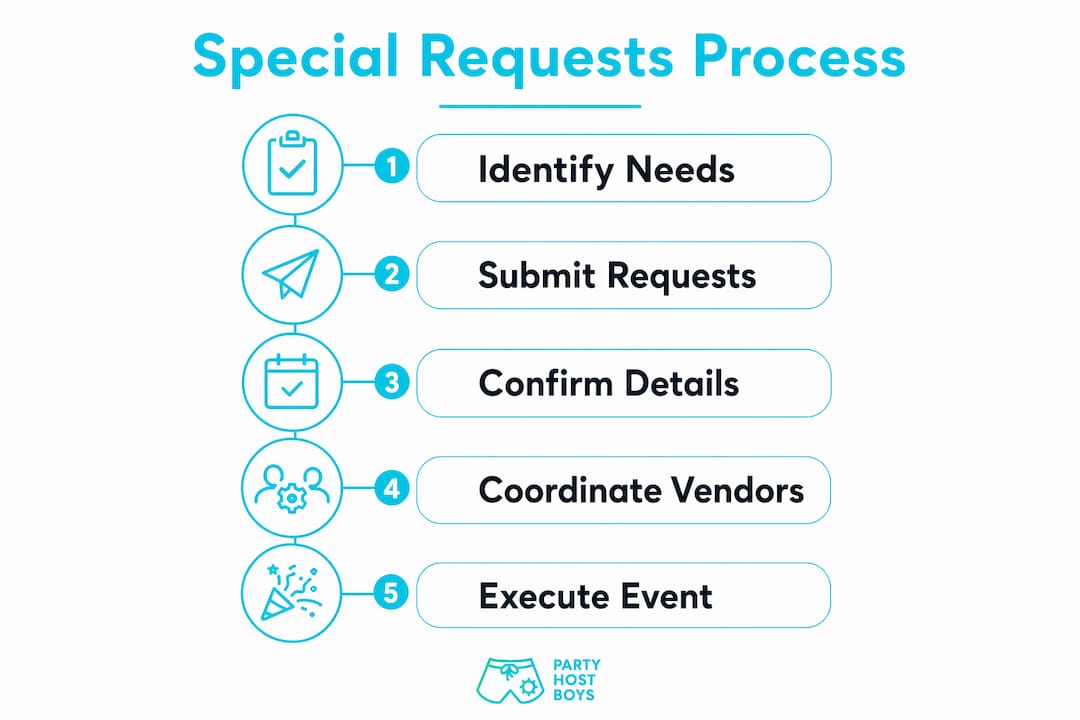
The five-step coordination process that professional services follow looks like this:
Collect requests at booking, using a structured intake form with specific fields for dietary needs, accessibility, and personalization.
Categorize by complexity to separate simple notes from requests that require vendor confirmation or additional fees.
Assign ownership to a named team member responsible for each request category.
Confirm in writing with the guest before the event, specifying exactly what will be delivered.
Brief the full team on event day so every staff member knows the active requests without the host having to repeat them.
Request type
Coordination level
Confirmation needed
Dietary accommodation
Single vendor
Written + verbal brief
Accessibility setup
Venue + staff
Written approval
Custom decor theme
Multi-vendor
Written + payment
Celebratory moment
Entertainment lead
Timed cue sheet
Custom cocktail menu
Bar team
Written + tasting
Pro Tip:Professional event planners create detailed event plans with timing anchors and designated support roles so special needs are met discreetly, without spotlighting guests or burdening the host on event day.
What are best practices for hosts when communicating special requests?
Clear communication is the single biggest factor in whether a special request gets fulfilled correctly. Vague notes produce vague results. Specific, early, and confirmed requests produce the experience you actually planned.
Effective reservation notes include the occasion, the guest’s name, and one specific request in roughly 25 words. That format gives staff everything they need to act immediately. A note that reads “birthday dinner” tells staff almost nothing. A note that reads “Birthday dinner for Sarah, window table, champagne toast at 8:00 PM” gives them a script.
“The best special request is one that arrives early, names the guest, states the need precisely, and asks for written confirmation. Anything less is a wish, not a plan.”
State the request in concrete terms. “Gluten-free” is better than “dietary restriction.” “Wheelchair-accessible seating near the entrance” is better than “accessible seating.”
Submit requests early. The closer to the event date, the fewer options the service provider has to fulfill complex needs.
Follow up for written confirmation. Do not assume a submitted note equals a secured service.
Prioritize your requests. If you have five requests, tell the provider which two are non-negotiable. This helps teams allocate resources correctly.
Coordinate with all vendors. A confirmed request with the caterer means nothing if the venue staff does not know about it.
Special requests may carry additional fees depending on staff time, reserved inventory, or specialty products. Knowing this upfront prevents surprises and confirms that the service is actually secured.
How does event scale change special requests management?
Event scale changes everything about how private party planning handles special requests. The strategies that work beautifully for 20 guests break down at 150.
Factor
Small event (under 75 guests)
Large event (75+ guests)
Budget focus
High-impact personalization per guest
Scalable systems and vendor coordination
Request complexity
Manageable by one coordinator
Requires multi-department ownership
Communication
Direct, informal confirmation
Formal written approvals and briefings
Risk of failure
Low, easy to catch and fix
High, cascading delays affect all guests
Personalization depth
Deep, individual touches
Broader, category-level accommodations
Small events allow hosts to go deep on personalization. A group of 20 guests at a bachelorette weekend can receive individually tailored welcome bags, custom cocktail names, and a host who knows every guest’s name. That level of attention is what Cabana Boys and Cocktail CowBoys deliver as a standard practice, not a premium add-on.
Large events require a different mindset. Multi-vendor coordination and timeline management become critical beyond 75–100 guests. A single unmanaged dietary request at a 200-person event can cascade into a kitchen delay that affects the entire service timeline. Professional coordination is not optional at that scale.
Pro Tip:For large events, build a “request register” spreadsheet before the event. List every confirmed request, the vendor responsible, the confirmation reference, and the timing cue. Share it with every team lead 48 hours before the event.
The role of customer service in hospitality training also shifts with scale. Frontline staff must balance guest satisfaction against legal and financial risks through real-time judgment. Proactive training helps staff distinguish between manageable accommodations and requests that require escalation. That judgment call happens dozens of times during a large event.
Key Takeaways
Special requests party service transforms a standard gathering into a personalized celebration by combining early communication, written confirmation, and professional coordination across every vendor and team member involved.
Point
Details
Define requests precisely
Vague notes produce vague results; name the guest, state the need, and set the timing.
Confirm in writing
A booking note is not a guarantee; secure written approval and payment where required.
Assign a hospitality lead
One point of contact prevents fragmented communication and missed requests.
Scale changes strategy
Events over 75 guests require multi-vendor coordination and formal request registers.
Treat requests as hospitality
Special requests handled proactively improve guest comfort and the host’s peace of mind.
How Cabana Boys and Cocktail CowBoys handle your special requests
Planning a bachelorette party, birthday celebration, or group trip means managing a lot of moving parts. Special requests should not be one more thing on your stress list.
Cabana Boys and Cocktail CowBoys specialize in exactly this kind of personalized event execution. Their Cabana Boys and Cocktail CowBoys arrive prepared, engage your guests, manage the bar, and keep the energy high, all while handling the details you have already confirmed. From custom cocktail menus to themed party games and celebratory moments, every request is treated as part of the plan, not an exception to it. Visit Party Host Boys to explore packages and book the experience your group deserves.
FAQ
What is a special requests party service?
Special requests party service is the professional practice of identifying and fulfilling individualized guest needs, including dietary accommodations, accessibility support, and personalized event touches, before and during a celebration.
Are special requests guaranteed once submitted?
A submitted note is not a guarantee. Written confirmation and payment are required to secure most special requests, particularly those involving reserved inventory or additional staff time.
How early should I submit special requests for an event?
Submit requests as early as possible, ideally at booking. Early submission gives service providers time to coordinate vendors, confirm availability, and brief staff before the event day.
How do I handle special requests for a large group event?
Events over 75 guests require a formal request register, multi-vendor coordination, and a designated hospitality lead to prevent communication gaps and service delays.
What makes a special request effective?
Effective requests include the guest’s name, the specific need, and the timing in roughly 25 words. Specific, confirmed requests produce far better results than vague notes.








 Austin
 Charleston
 Los Angeles & Orange County
 Miami
Miami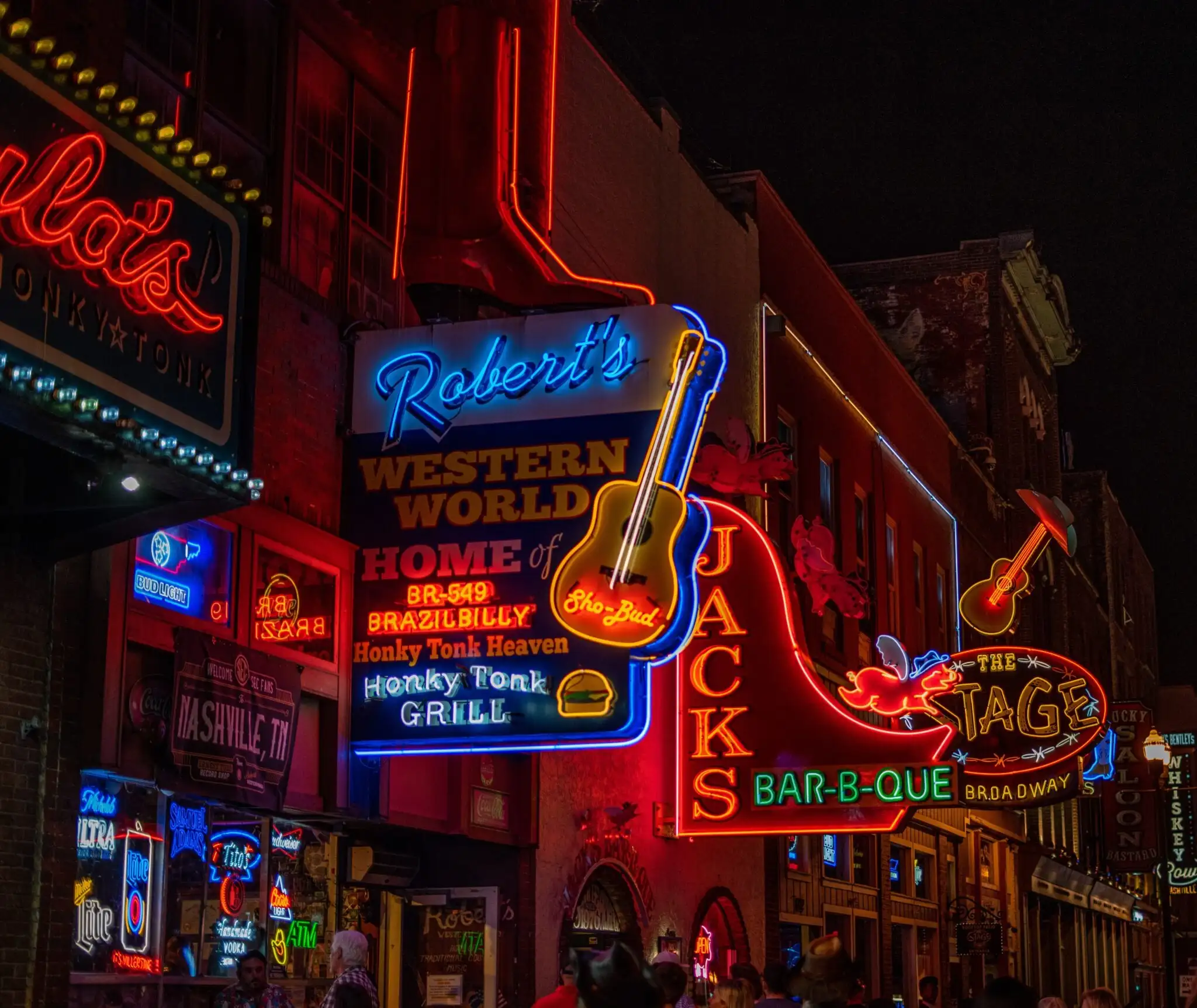 Nashville
 Palm Springs
 Savannah
 Scottsdale
 San Diego
 30A / Destin
 Cabana Boys
 Cocktail CowBoys
 Signature Party
 Brunch
 Game Night
 Cabana Glow
 Bagel Boys
 Party Bus
 Line Dancing
 Austin